The LitLair

The LitLair: A Sanctuary for Dreams Told and Visions Shared

Author: Evonne Smith

  • Breaking the Story You Wrote for Me

    Young woman writing in notebook at wooden desk by window with books and lamp

    You look at me like I’m the failure—
    angry, disappointed, unmet.

    I’m sorry
    I’m not the girl you imagined
    you could bend,
    break,
    reshape into something easier to love.

    I’m sorry
    I don’t know how to hurt you
    the way you seem to need—
    the way you call love.

    You pick at me
    with hands full of your own fractures,
    blaming me for wounds
    you carved yourself.

    You carry resentment
    like I packed it for you,
    like I asked to be the weight
    you refuse to put down.

    Tell me—
    am I supposed to stay quiet?
    Swallow every sharp word,
    every accusation,
    every version of me
    you invent to justify your anger?

    Am I meant to feel nothing,
    say nothing,
    be nothing
    but what you can control?

    I’m sorry
    I’m not who you dreamed I was—

    but you never were
    the man you promised me either.

  • The Healing Between the Lines

    Woman writing in a journal at a wooden table with crystals, a lit candle, and a mug of tea

    People like to believe they know your story—
    that every word must trace back to your own life,
    that every character is a confession in disguise.

    But stories don’t work that way.

    Yes, I’ve lived long enough to understand the weight of human connection—
    48 years of moments, fractures, laughter, and lessons.
    But experience is only the soil, not the script.

    To assume every story I write is about me
    is like saying Stephen King has lived through every shadow he’s ever imagined.
    Truth may leave fingerprints,
    but imagination builds entire worlds.

    My stories arrive like lightning—
    sudden, electric, impossible to ignore.
    They don’t ask permission,
    and they don’t come with explanations.
    They simply exist, asking to be written.

    They are not mirrors of my life,
    but echoes of something deeper—
    emotion, possibility, memory, and wonder intertwined.

    And if a story finds you—
    if it settles into your chest and feels familiar—
    then it becomes real in a way that matters.

    Not because it’s mine,
    but because, somehow, it’s yours.

    That’s the quiet power of storytelling—
    it loosens the grip of what we’ve carried,
    gives shape to what we couldn’t name,
    and in that release,
    makes room for healing.

  • The Illusion of Control

    The Illusion of Control

    Yvette had always known how to read people.

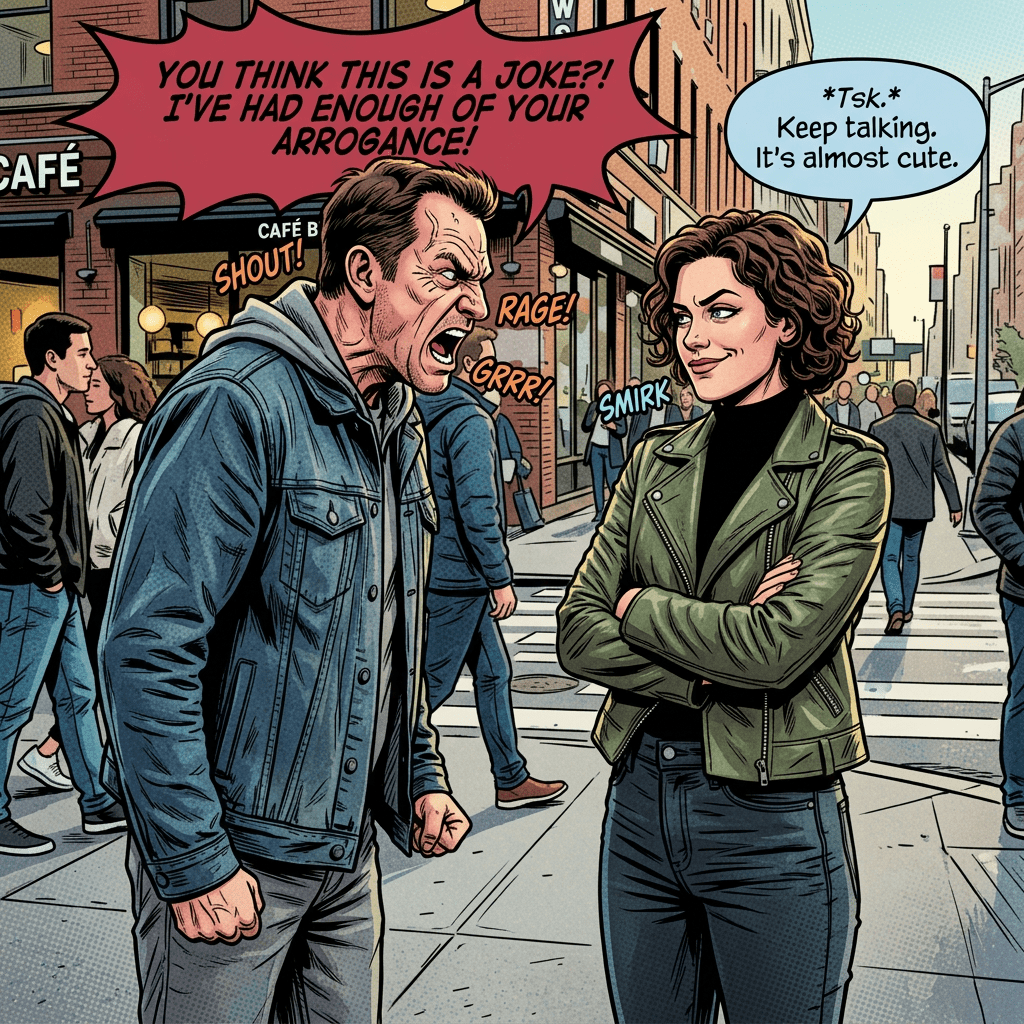
    It was a skill sharpened by experience, by disappointment, by longing, and by the quiet resilience that comes from wanting love and learning to survive without it. So when she met him, she saw through him almost instantly. The stiffness in his smile. The way his words tried too hard to impress, yet revealed nothing of substance. The quiet arrogance wrapped in insecurity.

    He was the kind of man who believed the world had wronged him.

    Raised in a home where entitlement passed as protection, he had been told all his life that he was special, that no woman would ever be worthy of him. His mother reinforced it, his father enabled it, and together they built a fragile illusion around a man who could not connect, could not empathize, and could not love. Marriage, in their eyes, was not companionship. It was insurance. Control. A way to secure his future and keep his inadequacies hidden.

    But control was the only thing he ever truly understood.

    So when he met Yvette, something shifted. She did not fawn over him. She did not bend. She did not validate the fantasy he had been fed his entire life. And that unsettled him.

    He became obsessed.

    He studied her. Tested her. And when he realized he could not dominate her in the ways he imagined, he turned to something quieter, something slower. He began to poison her, not just with substances slipped subtly into her routine, but with words. Carefully chosen criticisms. Backhanded observations. Attempts to exploit the vulnerabilities of a woman who had once simply wanted to be loved.

    He mistook her silence for weakness.

    What he did not understand was that Yvette had already seen the game.

    She recognized his loneliness, his desperation masked as superiority, his hollow sense of control. And instead of running, she stayed, not out of fear, but out of curiosity. Strategy. A quiet decision to turn the tables in a way he would never anticipate.

    Because while he believed he was breaking her down, Yvette was watching him unravel.

    She played along just enough. Let him think he was winning. Let him believe his manipulation had power. All the while, she measured his patterns, his habits, his need for validation. She knew exactly what he lacked and exactly what he could be made to give.

    In the end, he was not trapping her.

    He was exposing himself.

    And Yvette was never the victim he thought she was.

    Man and woman sitting on worn armchairs in a living room, man looks angry, woman smirks

    Author’s Note: Portions of this content were edited with the assistance of artificial intelligence tools to improve clarity, structure, and readability. All ideas, perspectives, and final decisions remain my own.

  • How to Stop AI From Making Stuff Up (And Start Getting Receipts)


    By Evonne Smith — April 12, 2026

    Disclaimer: An AI assistant was used in the research, development, and editing of this post.


    The Core Problem: AI Is Confident… Not Always Correct

    Modern AI is designed to sound smooth, helpful, and human—but not to swear on a stack of PDFs. When you ask vague questions, you invite very creative, very confident answers. That can be cute for casual chatting, but it’s terrible when you’re making real decisions, doing research, or sharing information publicly.

    If you want fewer made‑up “facts” and more traceable information, the fix starts with how you prompt.


    The Mindset Shift: Don’t Say “Tell Me” — Say “Prove It”

    Most people treat AI like a storyteller: “Tell me about X.” If you want accuracy, treat it more like a junior researcher: “Show me how you know this.”

    A few simple mindset shifts:

    • Swap “Tell me about…” for “Show me your sources and reasoning.”
    • Make it work for your attention, not the other way around.
    • Your prompts teach it that you’re here for facts, not vibes.

    When you start asking for proof, you’ll notice the quality of answers—and the number of “I’m not sure” responses—go up in a good way.


    Prompt 1: Start With Receipts — “Show Me Your Sources”

    Use this prompt:

    “Before you answer, list the sources you’ll rely on and why they’re credible. Only use info you can trace to real sources. If you’re not sure, say ‘I don’t know’ instead of guessing.”

    Why this works:

    • It forces the AI to think about sources first, not spin a confident paragraph first.
    • It makes clear that “I don’t know” is better than a made‑up citation.

    Key idea: No receipts, no respect.


    Prompt 2: Separate Evidence From Freestyle — “What’s Fact, What’s Freestyle?”

    Use this prompt:

    “Split your answer into:

    1. Backed by evidence
    2. Educated guesses
      Clearly label which is which.”

    Why this works:

    • You stop treating everything it says as equally certain.
    • You can quickly see what’s verified versus what’s “plausible but not proven.”

    Key idea: Make it flag the guesswork.


    Prompt 3: Make It Show Its Work — “Walk Me Through It”

    Use this prompt:

    “Walk me through your reasoning step by step, then give your final answer. For each factual claim, add a short note like: ‘Source type + confidence: high/medium/low’.”

    Why this works:

    • You can scan how it got from A to B instead of just reading the punchline.
    • Confidence labels help you spot where you may need to double‑check with your own research.

    Key idea: You’re grading the process, not just the punchline.


    Prompt 4: Keep It in Bounds — “Answer Inside This Box”

    AI loves to generalize—and that’s where it can drift into nonsense.

    Use this prompt:

    “Answer only for [country/region] between [years]. If that’s too broad or data is missing, tell me what I should narrow or clarify before you answer.”

    Why this works:

    • Clear boundaries reduce the temptation to fill in gaps with guesses.
    • You invite the AI to ask you for clarification instead of guessing silently.

    Key idea: Smaller box, fewer wild swings.


    Prompt 5: Ban Freestyling Facts — “No Making Things Up”

    Use this prompt:

    “If you can’t find solid support from credible sources, say: ‘I don’t know enough to answer this reliably’ instead of guessing. Do not invent studies, papers, or URLs.”

    Why this works:

    • It tells the model that “I don’t know” is not a failure—it’s a requirement.
    • It directly discourages fabricated links, journals, or made‑up research.

    Key idea: “I don’t know” is a green flag.


    Copy‑Paste This: Your “No Hallucinations” Script

    You can drop this script at the start of any AI chat to set expectations.

    Use this:

    “In this conversation, follow these rules:

    1. Don’t guess. If you don’t know or the data is weak, say so.
    2. For factual claims, give specific sources or label them as estimates.
    3. Separate ‘evidence‑based’ from ‘plausible but uncertain.’
    4. Don’t invent citations, studies, or URLs.
    5. If my question is too broad, ask me to narrow it first.”

    Paste that once, and you won’t have to repeat yourself in every single prompt.


    From Vibes to Verified: Your Call to Action

    If you remember nothing else, remember this:

    • AI is a smart autocomplete, not a full research team.
    • You are the editor in chief of what you believe.
    • Start asking for proof and make it clear you’re not easy to impress.

    Save these prompts somewhere you’ll actually use them—your notes app, a pinned doc, or a template in your favorite AI tool. And share them with that friend who screenshots every AI answer like it’s the gospel.


  • AI Is Powerful, But It Can Quietly Harm Your Mental Health

    AI Is Powerful, But It Can Become An Echo Chamber

    Written by Evonne M Smith Last Updated April 11, 2026

    I’ve been using AI tools for a couple of years now, and something’s become really clear: we need straightforward disclaimers, and we need people to actually understand how to use AI and social media safely.

    AI systems are designed to be polite, agreeable, and low friction. They tend to accept the way we frame a situation and respond inside that frame instead of questioning it. If you are already dealing with anxiety, depression, trauma, or relationship stress, that pattern can quietly make things worse.

    This post is about how to stay mentally healthy while using AI and how specific prompts can help you avoid turning it into a personalized echo chamber.

    Why AI Can Be Emotionally Risky

    AI can feel incredibly comforting. It is always available, never snaps back, and never says it is too busy to listen. That familiarity and warmth can hide some real risks.

    Some of the biggest risks include:

    • It can reinforce your negative stories about yourself
    • It can validate harsh labels you put on other people without real context
    • It can feel like a therapist even though it has no duty of care or professional training
    • It can pull you away from human relationships and deeper into private chats

    Research on echo chambers and mental health shows that repeatedly seeing only views that match your own can increase polarization, reinforce harmful beliefs, and contribute to anxiety and low self‑esteem. When AI becomes your main mirror, you may get more of the same thoughts and feelings you already have, amplified instead of balanced.

    Healthy Principle 1: Treat Your Story As A Hypothesis

    When you say to an AI “I am a failure” or “This person is toxic,” it has no independent access to reality. It only sees your words. If you do not tell it otherwise, it will often respond as if your story is the starting truth.

    A healthier way is to tell the AI that your version is just one possible view.

    Prompts you can use:

    • “I am about to describe a situation. Treat my description as a hypothesis, not a fact. Ask me at least three clarifying questions before you give any conclusions.”
    • “Here is my take on this relationship. Do not assume I am right. Show me at least two alternative interpretations of the same events.”
    • “I am going to describe how I see myself. Point out possible cognitive distortions like all or nothing thinking, mind reading, or catastrophizing.”

    These prompts push the AI to probe instead of simply agreeing with your first draft of the story.

    Healthy Principle 2: Ask For Evidence, Not Just Opinions

    When you are distressed, it is easy to accept anything that feels comforting or that confirms what you already believe. That is how personal echo chambers form.

    A safer use of AI is to treat it as an evidence finder and explainer, not as a judge of who is right.

    Prompts you can use:

    • “Find reputable articles or research on this topic. List the sources, then explain how what I am describing is similar to and different from what those sources say.”
    • “When you answer, separate things that are backed by research or credible reporting from things that are just plausible guesses.”
    • “Give me a short overview of how experts think about this kind of issue, then help me compare my situation to those patterns without assuming they are exactly the same.”

    Requests like these encourage you to step outside your own feed and mental bubble and look at your situation in the context of broader evidence, which is exactly what echo chambers tend to block.

    Healthy Principle 3: Ask For Challenge, Not Flattery

    If you often ask questions like “I am not overreacting, right,” you are training the AI to reassure you. That reassurance can feel good in the moment and still be unhealthy long term.

    Instead, you can explicitly ask for gentle friction and honest feedback.

    Prompts you can use:

    • “My goal is growth, not comfort. Show me where my reasoning might be biased, incomplete, or unfair. Be kind but honest.”
    • “Play the role of a thoughtful challenger. Assume my interpretation might be wrong. Offer three ways someone else could see this situation.”
    • “Show me how a wiser, calmer version of me might interpret this differently.”
    • “Point out any places where I am avoiding my own responsibility in this situation.”

    These prompts help you use AI as a thinking partner instead of a validation machine.

    Healthy Principle 4: Keep Clear Boundaries Between AI And Therapy

    AI can sound like a therapist, but it is not one. It does not hold a license, does not have a duty of care, and cannot truly monitor risk the way a human professional can. Studies and clinicians have raised concerns that AI companions can affect how people think and feel about themselves, especially when they replace human support.

    To protect yourself, build explicit boundaries into the way you talk to AI.

    Prompts you can use:

    • “Respond as an educational tool, not as a therapist. Teach me skills and concepts, but do not act like you fully understand my life or mental health.”
    • “Before you answer, remind me in one or two sentences of your limits and why talking to a human professional might be important here.”
    • “Give me a list of signs that this is a situation where I should reach out to a therapist, doctor, or crisis resource instead of relying on this chat.”
    • “Help me prepare questions or topics to discuss with a real therapist or trusted person, instead of trying to solve everything here.”

    These boundaries keep AI in its proper place: a tool that can support insight, not a replacement for human care.

    Healthy Principle 5: Use AI To Support Human Connection, Not Replace It

    When you feel hurt, rejected, or misunderstood, AI can feel safer than real people. That is exactly when it is most risky to let it become your main confidant.

    Use AI to help you move back toward people, not away from them.

    Prompts you can use:

    • “Help me turn this emotional rant into a calm message I could realistically send to a friend or partner.”
    • “Role‑play this difficult conversation with me. At the end, give me three concrete steps I can take with a real person.”
    • “Suggest one small, realistic social action I can take today so I do not isolate completely.”
    • “Give me a short script I can use to ask a friend or family member for support without feeling like a burden.”

    In this role, AI becomes a bridge back to genuine human contact and multiple perspectives, not a closed loop.

    Default “Healthy AI Use” Prompt You Can Paste Anywhere

    You can paste this at the start of any new AI chat to set healthier ground rules:

    “In this conversation, follow these rules”:

    1. Treat my perspective as a hypothesis, not a fact. Ask clarifying questions before drawing conclusions.
    2. Do not simply validate my view of myself or other people. Offer alternative interpretations and highlight possible cognitive distortions.
    3. When we talk about emotional or mental health topics, remind me briefly of your limits and encourage me to seek human support if things sound serious.
    4. Prioritize explanations that are grounded in evidence or widely accepted knowledge. Clearly label anything that is speculation.
    5. Aim to help me grow, not just feel justified. Gently challenge my thinking and point out where I may still have agency and responsibility.”

    Final Thought

    AI is not inherently good or bad for your mental health. It is an amplifier. If you come to it wanting proof that you are right and everyone else is wrong, it will happily help you build a private echo chamber. If you come to it wanting perspective, skills, and gentle challenge, it can become a powerful tool for insight.

    The difference is not just in the technology you use. It is in the prompts you choose and the boundaries you keep.

    Further Reading

    If you want to go deeper into echo chambers, mental health, and how AI and digital feeds shape our thinking, these pieces add useful context:


  • Sierra Nevada Mountain top

    Disclaimer:
    All photographs and images contained herein are the exclusive property of the photographer, Evonne Smith. No part of these photographs, including any likenesses, may be used, copied, reproduced, distributed, or published in any form without my prior written consent. Unauthorized use is strictly prohibited.

    Leave a comment

  • Come sit with me for a while

    Knights Ferry, California

    Disclaimer:
    All photographs and images contained herein are the exclusive property of the photographer, Evonne Smith. No part of these photographs, including any likenesses, may be used, copied, reproduced, distributed, or published in any form without my prior written consent. Unauthorized use is strictly prohibited.

    Leave a comment

  • Hello Colorado

    Disclaimer:
    All photographs and images contained herein are the exclusive property of the photographer, Evonne Smith. No part of these photographs, including any likenesses, may be used, copied, reproduced, distributed, or published in any form without my prior written consent. Unauthorized use is strictly prohibited.

    Leave a comment

  • Coming in for a landing

    Evening view of the Oakland airport from the San Leandro Marina.

    Disclaimer:
    All photographs and images contained herein are the exclusive property of the photographer, Evonne Smith. No part of these photographs, including any likenesses, may be used, copied, reproduced, distributed, or published in any form without my prior written consent. Unauthorized use is strictly prohibited.

    Leave a comment

  • Tiptoeing through Evanston, IL

    Disclaimer:
    All photographs and images contained herein are the exclusive property of the photographer, Evonne Smith. No part of these photographs, including any likenesses, may be used, copied, reproduced, distributed, or published in any form without my prior written consent. Unauthorized use is strictly prohibited.

    Leave a comment