
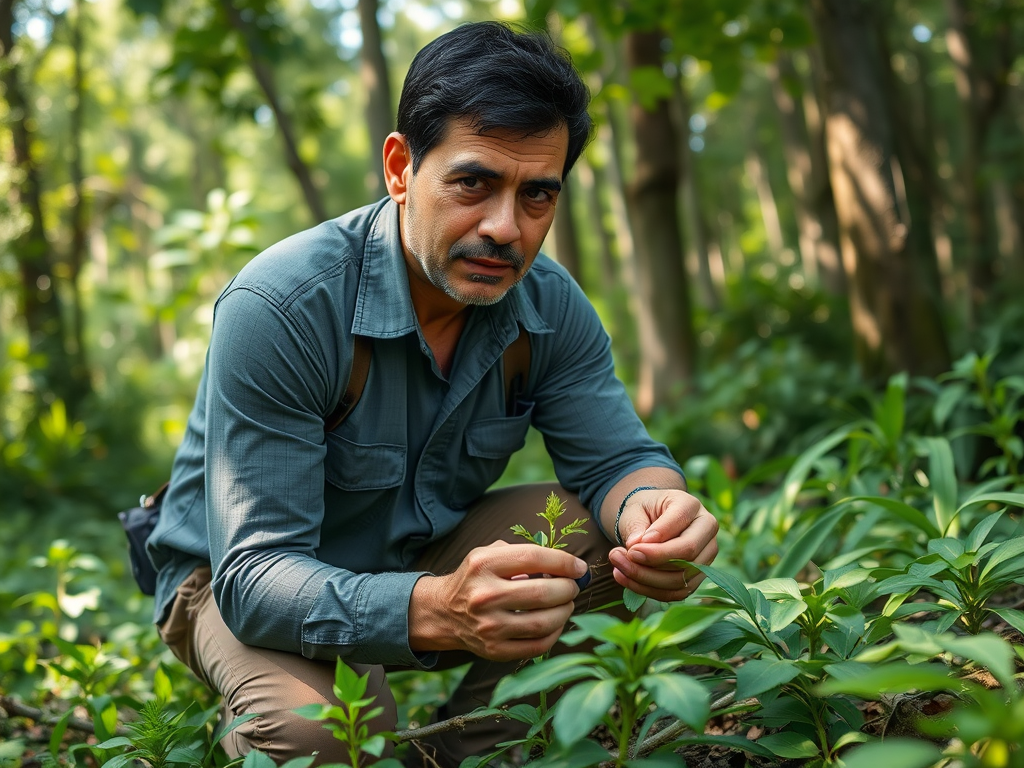
It was a hot, sticky afternoon in the small village of Kampung Duyoh, just southwest of Borneo. Dr. Gary King was wrapping up his last day of research. He’d spent weeks exploring the village and the nearby forest, where pitcher plants carpeted the ground. The locals, who harvested these plants for food, were eager to guide him. But by late afternoon, Dr. King found himself alone and far off the beaten path.
He had been collecting samples under the relentless sun for hours when he decided to stray from the trail in search of shade. Distracted and tired, he wandered deeper into the forest. When he finally looked up, he realized he was surrounded by dense growth—trees that seemed to have no trunks, or perhaps trunks completely covered in massive pitcher plants. He marveled at their size, gazing upwards, ignoring the strange wriggling at the base of the plants.
When he looked down, he noticed what appeared to be animal entrails. Curious, he followed the grisly trail toward the enormous, plant-covered trees. There, he saw what might have been a sun bear, a gibbon, or perhaps a proboscis monkey—struggling, but slowly being consumed by the overgrown brush. As he edged closer to snap a photo, a large puff of spores erupted from the top of one of the trees, raining down over him and his gear.
Repulsed and alarmed, Dr. King grabbed a specimen jar and collected one of the spore-covered plants from a nearby tree that wasn’t busy devouring an animal. He quickly gathered his belongings and fled back to the village. There, he washed the spore dust off in the river before returning to his hut. He carefully labeled all his specimens, except for the mysterious new plant, which he marked as “Specimen X.” He packed everything away for his flight back to North Carolina.
That night, he joined the villagers for food and drink, listening to their stories about forest monsters—myths of mystical plants that hunted humans, and tales of lost princesses rescued by valiant knights. The next morning, Dr. King felt off: tired, hungry, and irritable. He blamed it on the food and a late night. After a grueling 30-hour flight, he finally landed in Wilmington, NC, exhausted. He stashed his specimens, showered, and collapsed into bed.
The following day, despite feeling ill, Dr. King ventured into the forest near his home to collect Sarracenia, the native pitcher plant. He was eager to attempt crossbreeding the Southeast Asian Nepenthes with the local Sarracenia, hoping a recent mutation he’d discovered would allow them to hybridize. He brought the unknown specimen from Borneo and planted it at the edge of a stream to observe whether it could survive in the humid North Carolina climate.
To his surprise, when he returned a week later, the plant had not only survived—it had flourished, spreading along the bank and climbing several trees. As he photographed the thriving plants, he wandered absentmindedly, unaware that he was walking into the path of a black bear. With his back turned, the bear attacked. As Gary screamed, only a puff of spores escaped his mouth. The bear devoured him. Where his blood stained the ground, the spores quickly took root, and bizarre plants sprouted, erasing any evidence he had ever been there.
Years passed. The alien plant continued to spread, overtaking trees and claiming the occasional hiker—or their unwitting dog. Some victims were devoured; others, infected by spores, left the forest as carriers, spreading the contagion far beyond the woods.





You must be logged in to post a comment.